


11 Questions: Immemorial by Lauren Markham
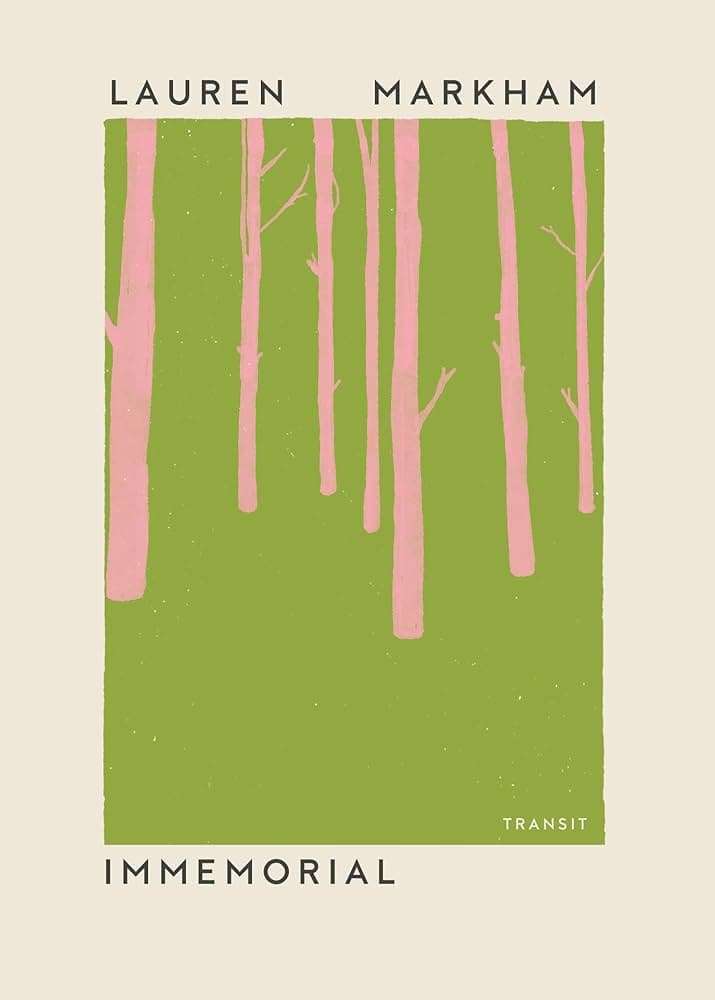
Lauren Markham’s new book Immemorial is an awe-inspiring attempt to write about catastrophes and feelings that are seemingly beyond language– climate catastrophe and climate grief. She does this through experiencing and describing the art of public memorials, visiting the sites of past, present, and future tragedies, and finding meaning in memorials to lost forests, reefs, and glaciers. Markham is in search of a shape for grief that is purposeful, not paralyzing– grief as fuel for an unprecedented future. She shared some of her writing process with KtB.
Describe your book in three adjectives.
Inquisitive, reflective, earnest (sorry!)
What is one of your favorite sentences from the book?
“In 2017, complicit was named a word of the year, but ever since, it had paradoxically become something of a linguistic escape hatch: simply admit your complicity and then you’ve subverted it, free now to fly on by to the next destination, to the rest of your complicit life.”
Name a book or writer that inspired or guided you as you wrote.
Daisy Hildyard’s The Second Body really moved me. I loved how she blended personal narrative with theory.
What is something you discovered in the process of writing this book?
I set out to write a book about memorials, and it soon became a book about climate grief, too. But eventually I realized that it was also a book about the failures of language in the age of climate catastrophe. It was a theme that emerged again and again and I kept brushing it away, until I realized that it was key to the book.
What was challenging about the process?
This is a book that reckons with grief–particularly climate grief–and looks to the art of memorial. I was lit up by all of these memorial (and memorial-adjacent) spaces I visited and learned about. But I found them very hard to describe! So I guess I learned that describing art and the built world is a learning edge for me. It doesn’t come naturally.
What was sustaining about it?
I loved looking at and considering art in the physical world. It helped jolt me out of my stuckness as a writer whose medium is words. It lit me up.
What’s a song that would be on the book’s soundtrack?
The whole album Songs of Disappearance — tracks made from the sounds of extinct or endangered birds.
Who are some of the people you wrote this book for?
Anyone grappling with grief in the face of our climate emergency, anyone feeling like their medium is failing them, or they are failing their medium.
What are some of the communities that shaped it?
I think artists, designers, futurists and activists helped shaped this book, and of course writers, too. This is a book in which I’m tangling with images, ideas, and urgent political, ecological imperative.
What kinds of work do you want your book to do in the world? What are your hopes for its afterlife?
I hope this book is a balm, a companion, but also an agitator. We can’t ignore our grief; we also can’t let grief shut us down.
What are you doing next? (Does not have to be a writing project!)
I’m working on a novel set in early California statehood. And I think I’m starting a guerilla newspaper, too.

Briallen Hopper is editor of KtB, and author of Hard to Love: Essays And Confessions (Bloomsbury, 2019). She teaches writing at Queens College, City University of New York, and holds a PhD in English from Princeton. Learn more at her website, www.briallenhopper.com, or follow her on Twitter @briallenhopper.